
Volume I – Middle School Style:
The last time we rowed Night of the Moonjellies, Haley was in 4th grade, Jordan was in 2nd grade and Parker was in Kindergarten. Parker was so little that he only remembered “bits and pieces” from his early homeschooling education. I’m glad I captured so many of those moments.


It’s become our family homeschooling tradition to read Night of the Moonjellies at the end of every school year, make sketches of various sea creatures, make ocean-themed treats and finish with a special sushi dinner. This year, Parker asked to row Night of the Moonjellies as our last FIAR book. It’s fun to be able to do many of the same things, but at a deeper level with an older junior high student.
READY TO ROW:
Kick-off Breakfast:

We kicked off this row with jellyfish pancakes, fresh fruit and bacon.
Story Disk:

As we rummaged through ALL the story disks we’ve colored and placed on our map, year after year, we scattered them and Parker reviewed each book we rowed. There were a few stumpers, but he definitely got the majority. After this fun memory game, Parker placed the original story disk over the New England area of the United States..
Cover Art:

I remember how he drew and colored the iconic “Night of the Moonjellies” cover art last time. This time around, Parker chose to recreate Margras as his cover art.
BIBLE:
Memory Verse:
Years ago, I created a Bible Verse pack for one of the first times we rowed Night of the Moonjellies.

You can purchase it HERE at our TPT Store.

Parker used the copywork page to record his memory verse. This year, my daughter, Haley, created new artwork for a second Bible verse printable.

You can purchase your copy HERE at our TPT store.
SOCIAL STUDIES:
New England States:
We’ve recently studied the New England states while rowing Cranberry Valentine in February, but that didn’t stop us from reading about them again. Each time we explore the states, we study them in a slightly different way.

As before, we began our study by mapping out the New England states using the map from our Story Review.


As we usually do, we explored a different state each day. First we read from Travels with Charlie Travelin’ the Northeast. Afterwards, we read from the National Geographic Kids Ultimate U.S. Road Trip Atlas.
In addition to the above books, Parker read the Exploring the States book series again. Since these are quick-reads for Parker, adding them each day provided a nice backdrop for establishing our story setting.
Maine:


We reviewed Maine and Parker read Exploring the States Maine the Pine Tree State on our EPIC app.
Vermont:


We reviewed Vermont and Parker read Exploring the States Vermont the Green Mountain State on our EPIC app.
New Hampshire:


We reviewed New Hampshire by reading Exploring the States New Hampshire the Granite State on our EPIC app.
Massachusetts:


We reviewed Massachusetts by reading Exploring the States Massachusetts the Bay State on our EPIC app.
Rhode Island:


We reviewed Rhode Island by reading Exploring the States Rhode Island the Ocean State on our EPIC app.
Connecticut:


We reviewed Connecticut by reading Exploring the States Connecticut the Constitution State.
Running a Small Business:


Last time around, we studied Night of the Moonjellies, we read some fun things about eating out like The Berenstain Bears Go Out to Eat, Froggy Eats Out and Hamburger Heaven.

Then we read I Have a Restaurant which gave a little more insight into running a small business.


Our kids are pretty familiar with the ups and downs of the restaurant business. Their uncle and aunt owned two restaurants and they had the privilege of working in the kitchen a few times during the holiday season.


This time around, I thought it would be nice to explore Alice Waters since we touched on her experiences while rowing Minette’s Feast.

Parker and I read Alice Waters and the Trip to Delicious on our EPIC app. It was a really great book, although it spoke more about her passion for fresh foods in schools rather than her experience owning a restaurant.

While on our EPIC app, Parker noticed The Gardener of Alcatraz which was also about growing things that were used in prison cooking. It was actually a really interesting book that fully captivated Parker’s attention. I wouldn’t call it a rabbit hole dive, but it was a pleasant diversion that just made this unit a bit more memorable.


As we learned about eating fresh foods locally grown, it was about the time when we usually plant our own vegetable garden. I went to our local nursery and picked out a variety of herbs, vegetables and several different annual flowers to attract our favorite pollinators.
Responsibility:


Parker has learned to be more responsible with household chores, like helping with the laundry, collecting the trash and caring for our pet cat. He also has his own baseball card business on the side.
Life Near the Sea:
Studying the ocean is one of our all-time favorite things to do in homeschool.

Since this story takes place on the East coast, we read Discover the Oceans Atlantic Ocean.


We also read About Habitats Oceans along with several other books about the ocean.


While in the Northeast, we read a few of our favorites – One Morning in Maine by Robert McCloskey and The Little Island by Margaret Wise Brown.
LANGUAGE ARTS:
Contrast:


We went straight to the book to cover this topic. The author successfully conveyed contrast by using both descriptive text and thoughtfully illustrated scenes.
Literary Device – Italics:

We’ve studied italics many times, but I added a Grammar by the Sea activity in our Story Review.
First Person Point of View:
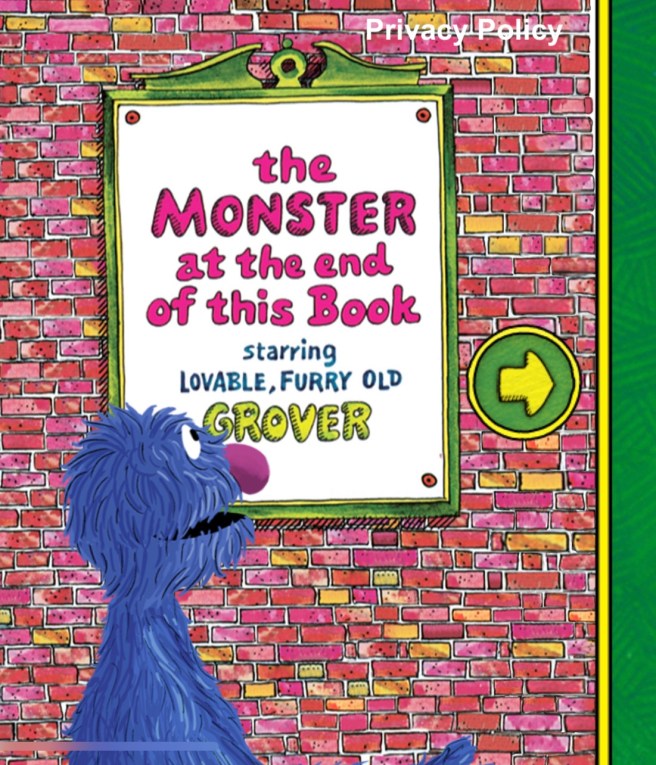
We reviewed first, second and third person point of view while rowing The Day You Begin. We read When I Was Young in the Mountains to cover first person point of view, The Monster at the End of this Book for second person point of view, and Chrysanthemum for third person point of view.



I found an excellent Point of View anchor chart from Elementary Nest and used it as a template for creating a notebook entry in Parker’s FIAR notebook. If I don’t have time to create a worksheet, I’ll just sketch a rough draft into the FIAR Notebook for Parker to complete referencing the source material.

Vocabulary:

I added a vocabulary worksheet in our Story Review. Parker completed it and glued it in his FIAR notebook.
List-Making:

I chose to use this component as a story review exercise. I challenged Parker to compose a list of all the food related words he remembered reading in the story. Afterwards, we checked his list against the story text. He remembered most of the foods and ingredients written and pictured in the illustrations. He was surprised to find that he still missed a few.

I added a worksheet in our Story Review so students can color the food items mentioned/pictured and draw one from memory that wasn’t referenced with clipart.
MATH:
Learning About Money:


Parker recently studied our currency and minting process while rowing On the Corner of Chocolate Avenue.

I added a couple of “It Makes Cents” money worksheets in our Story Review.


For Parker, I thought it would be fun to create a “dramatic play” element where he could create a menu, add prices, invite customers, write orders, create tabs and provide change. This activity is so relevant, because working is a part of life.

I added several components for this Dramatic Play and/or math activity in our Story Review. Parker loved it so much that he set up a table with chairs and invited us to sit and order. Honestly, we haven’t done a “dramatic play” activity since his early education days. This was truly a practical math lesson as he took our orders, created a bill and provided change based on the money we gave him.
SCIENCE:
Aquatic Biome:
After reading from the FIAR manual, Parker and I discussed all aquatic biomes – fresh water, salt water and estuaries . We approached the idea of aquatic biomes using a Venn diagram. Fresh water would be on one side, salt water would be the other side and estuaries would be the central area that overlapped, because an estuary contains both fresh and salt water.

Then we focused our attention exclusively on salt water biomes by reading Marine Biome by Grace Hansen. This was more of a basic book and would be perfect for a younger audience.

I then found Marine Biomes by Louise and Ricahrd Spilsbury on our EPIC app. This was a more in-depth look at marine biomes and was perfect for my junior high student. We read it over several days.
OCEAN ZONES – CRAFTivity:
I created an Ocean Zones CRAFTivity years ago.

You can purchase your copy HERE at our TPT Store.


This ocean activity quickly became an end-of-year school project that the kids looked forward to every year. We’ve gone through the ocean zones from top to bottom and vice-versa. This year, Parker and I started from the Shoreline and worked our way to the Abyss.
We started our ocean zones CRAFTivity the previous year, but sadly we stopped in the sunlit zone. This year, we planned to read about the entire ocean and make creature sketches of the lower zones we missed before.

Parker and I brought out our 3-D Explorer Oceans book and read through each zone together. Afterwards, Parker studied each zone on his own.


While studying each zone, he read more from the DK Eye Wonder Ocean and Julia Rothman’s Ocean Anatomy book. I highly recommend Julia Rothman’s books, because they add levels of detail with beautifully illustrated pages that appeal even to the most reluctant reader.
Shoreline:

We began our exploration with the shoreline layer, which includes so many places to explore. We covered as many as we could, but there’s always material to cover each time.


Since Parker already had creature sketches from the shoreline, we decided to read Clam-i-Am and complete lapbook inserts from our Clam-I-Am Little Lapbook printable.


The beach is one of my favorite places to visit. The beaches in San Diego were warmer than those we have in Northern California, but any beach visit is a treasure to me.

Parker and I read The Specific Ocean, which truly captures the beauty of our great Pacific Ocean.

Our Pacific may not be warm and tropical, but it is majestic and holds some of the most beautiful creatures in God’s creation. I have fond memories of my father taking us to the beaches in Northern California when we were little.
Seabirds

The longer we study the ocean, the more I realize just how much I love the shoreline. The sand, the rock pools, and especially the seabirds. This year, I took a whole day just to explore these beautiful creatures.

Parker and I read About Seabirds on our EPIC app. I love the About series, because it’s short enough to read with young children, but there’s detailed information at the end of the book for older students. I encouraged Parker to pick a creature from each ocean zone and write a “Creature Report” with the worksheet in our Story Review.

He chose the sandpiper. He researched sandpipers, sketched the bird and completed the worksheet from our Story Review.

I happen to love seagulls. I always have. For this row, I added a Parts of the Seagull worksheet in our Story Review. Parker color-coded it and added it in his FIAR Notebook.

I love seeing the shorebird exhibit when we’re at the Monterey Bay Aquarium. There are times I watch the Aviary Live Cam.
Intertidal Zone:

While exploring the shoreline, we cannot overlook the tide pools, rock pools, and tiny crevices that create miniature biomes for creatures caught between the tides.

Parker began reading about the tides in Julia Rothman’s Ocean Anatomy book.

Afterwards, we read What Do You Find in a Tide Pool? together on our EPIC app.

He completed the tide pool portion of our Clam-I-Am tide pool lapbook inserts and glued them in his FIAR Notebook.

We also have a FREE Intertidal Zone activity that combines art and science. Younger students can be included as they color, cut and paste their own tide pool. You can download this activity HERE from our TPT Store.


While visiting San Diego, we stopped by the beach and checked out the various rock pools. God’s creation is amazing and beautiful and fill us with awe and wonder.


We also visited the Birch Aquarium where we were able to see and touch some of the intertidal creatures.
Beachcombing:

Beachcombing Exploring the Seashore by Jim Arnosky is our go-to book for the shoreline zone. Parker and I read this book together. If you follow our posts, you’ll know how much we love Jim Arnosky’s books.


Afterwards, he completed the remaining shoreline Clam-I-Am lapbook inserts.
Seashells:
Most of the shells we find on the beach are are that remains of a living creature called mollusks.


Parker and I read About Mollusks by Cathryn Sill.


Next, Parker used Julia Rothman’s Ocean Anatomy to complete his Parts of the Shell worksheet from our Story Review.

Sneakers, the Seaside Cat is another one of our favorite books to read while studying the shoreline unit.
Surface Waters:

We plunged into the ocean to find out what creatures call the surface waters home.


As we began our dive into the deep blue sea, we continued to read about and make creature sketches for our Ocean CRAFTivity. In addition, Parker read Wish-For-a-Fish and completed the Wish for a Fish Little Lapbook inserts as he studied each of the ocean zones.
Why is the Ocean Blue:

As we launch into the surface waters, we answer questions like, “Why is the Ocean Blue?”


I absolutely love Julia Rothman’s Ocean Anatomy book. It’s covers many topics that aren’t usually addressed in illustrated ocean books. This particular subject was also covered in the Clam-I-Am book and Clam-I-Am lapbook insert, but Rothman’s illustrations and reference text completed this topical dive.
The Zones:


Before diving deep into the layers of the ocean, we decided to review the actual ocean zones first.

Parker read a summary of the layers of the ocean and completed the ocean zones insert from our Wish for a Fish Little Lapbook.
Kelp Forest:


The kelp forest is a wonderful unit to explore when diving into the surface waters. So many creatures depend on the ocean’s kelp forests. They provide food and shelter and help support many ocean food chains.


We read Over and Under the Waves. This was another special book, because it features our beautiful Monterey Bay. As you can see pictured above, the beloved sea otters on the left and the kelp forest on the right.

Parker continued working on his Clam-I-Am inserts for that included plants and animals in the surface waters.

Parker and his Dad are checking out one of the smaller exhibits featuring creatures in the kelp forest.
Marine Mammals:

There are so many wonderful marine mammals to study in an ocean unit. I think my favorite are the adorable sea otters. We’ve visited them many times at the Monterey Bay Aquarium. Parker and I read About Marine Mammals by Cathryl Sill. As you can see from this post, I love the “About…” series.

There are so many wonderful marine mammals we could study. This time around I wanted to cover the gentle manatees, also known as “sea cows”.


In addition to our DK Eye Wonder Ocean book, Parker read All About Manatees by Jim Arnosky.

Afterwards, he completed a report about manatees using the Creature Report worksheet from our Story Review.
Sunlit Zone:

The oceans are teeming with life – beautiful, powerful, and at time ominous. Each time we study them, I’m filled with awe, wonder and a sense of appreciation that I cannot adequately verbalize. It’s simply spectacular.

Parker color-coded the cold and warm ocean currents around the world using the World Map from our Story Review.
Coral Reefs:


The Coral Reefs are so beautiful. The colors are overwhelming. This unique biome contains the most colorful assortment of creatures.


Parker read Jump Into Science Coral Reefs then color-coded coral reefs around the world using the worksheet from our Story Review.

Parker read About Habitats Coral Reef by Cathryn Sill.


He also completed coral anatomy and life cycle worksheets from our Story Review.


This time, we didn’t do the filtering experiment at the end of the book, but it is a really great activity when time permits.

This seemed like the perfect zone to read all about the various types of fish that live in the ocean. Parker and I read About Fish by Cathryn Still.


We also saw different corals and creatures that inhabit coral reefs at the Birch Aquarium this summer.


Though we didn’t have time this year, our kids LOVE making Coral-REEFkrispies and shaping little sea creatures out of marzipan or another edible medium.


Parker completed several of the fish inserts from our Wish-for-a-Fish lapbook.
Twilight Zone:


The twilight zone is a deeper layer of the ocean where many of the creatures have to create their own light source.

Parker read How Deep is the Ocean and chose to study the angler fish for his Creature Report for the twilight zone of the ocean.

He complete the Creature Report and added it in his FIAR Notebook.
Midnight Zone:

The darker the zone, the creepier these creatures look. There are so many ominous “monsters” in the deep.

Parker read The Awesome Book of Monsters of the Deep as we exited the midnight zone and entered the abyss.

The Abyss:


It’s hard to believe there is any life at all at the bottom of the ocean. The most interesting, in my opinion, is the black smokers which spout mineral-rich water that supports hundreds of life-forms.

Haley was BEYOND thrilled to finally see the isopods at the Monterey Bay Aquarium. She was able to touch them, probably the highlight of all the years we’ve visited.


One of our favorite activities was making smoker stack snacks with hostess cakes (or brownies), marshmallows and Swedish Fish. We call them Trenchies!
FINE ARTS:
Medium – Pastels:
Though we didn’t actually use chalk pastels for this row, we’ve used them many times during our years rowing FIAR books.


The kids loved experimenting with different art mediums. So many fun FIAR memories surrounding mixed media projects that included oil and chalk pastels.
Viewpoint:


We did viewpoint art sketches while rowing All Those Secrets of the World and The Glorious Flight.
Light and Dark:


For the subject of “light and dark”, we referred back to the story illustrations.
Warm Palette:


For discussing this topic, we referred back to the illustrations as well.

We even added warm and cool color worksheets in our Story Review so students can explore their own choice of colors and create pictures based on a warm/cool palette.
HELPFUL LINKS:
Pinterest Board:
You can find most of the activities, ideas, and printables from this post on our Night of the Moonjellies Pinterest Board.
Youtube Playlist:
As with our other rows, we created Night of the Moonjellies playlist with read-alouds, music, science, and other clips.